Coping with Grief: Why Sharing Memories Online Helps the Healing Process
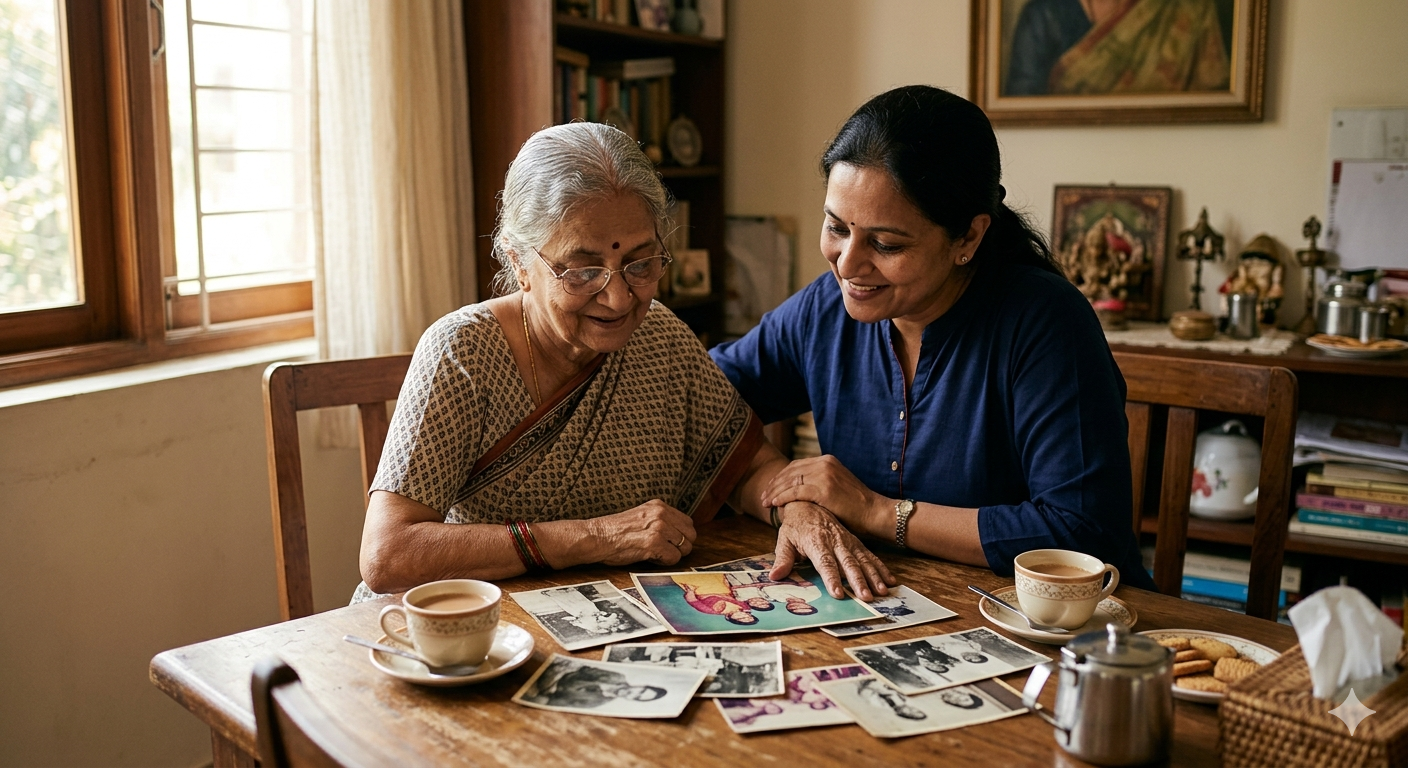
Grief researchers have long understood something that grieving families often discover instinctively: talking about a loved one, sharing memories, and keeping their presence alive in everyday conversation isn't avoidance — it's part of healthy healing.
What grief psychology tells us
For decades, the popular idea of grief was about "moving on" — letting go, reaching closure, putting the past behind you. More recent psychological understanding, particularly the continuing bonds theory, suggests something different: healthy grieving often involves maintaining a connection with the person who has died, rather than severing it. This means the goal isn't forgetting, but integrating their memory into ongoing life in a healthy way.
This is exactly what sharing memories online does.
Why digital memory-sharing helps
It externalizes grief instead of isolating it. When memories live only in your head, grief can feel like something you carry alone. Writing them down, sharing photos, and reading messages from others who also miss the person creates a sense of shared mourning rather than solitary pain.
It allows non-linear grieving. Grief doesn't move in a straight line — some days are harder than others, often without warning. Having a place to revisit memories on your own time, whenever you need to, supports this reality far better than rituals tied to fixed dates alone.
It involves the whole family, including those who are usually left out. Children, distant relatives, and friends who didn't get to say goodbye in person can still contribute memories and feel part of the collective mourning process.
It creates something to return to. Anniversaries and birthdays can be especially hard. Having a dedicated space — filled with photos, stories, and a song that captures who they were — gives families somewhere meaningful to go on those difficult days.
A gentle reminder
If you're grieving right now, know that there's no "right" way to do it, and no fixed timeline you're supposed to follow. Sharing memories — whether through conversation, writing, or a digital tribute — is one of many valid ways to process loss. If grief feels overwhelming or doesn't ease with time, speaking with a grief counselor or mental health professional can also help.
A digital memorial can be a place to return to, whenever you need it. Create one on Heavenly Tribute.