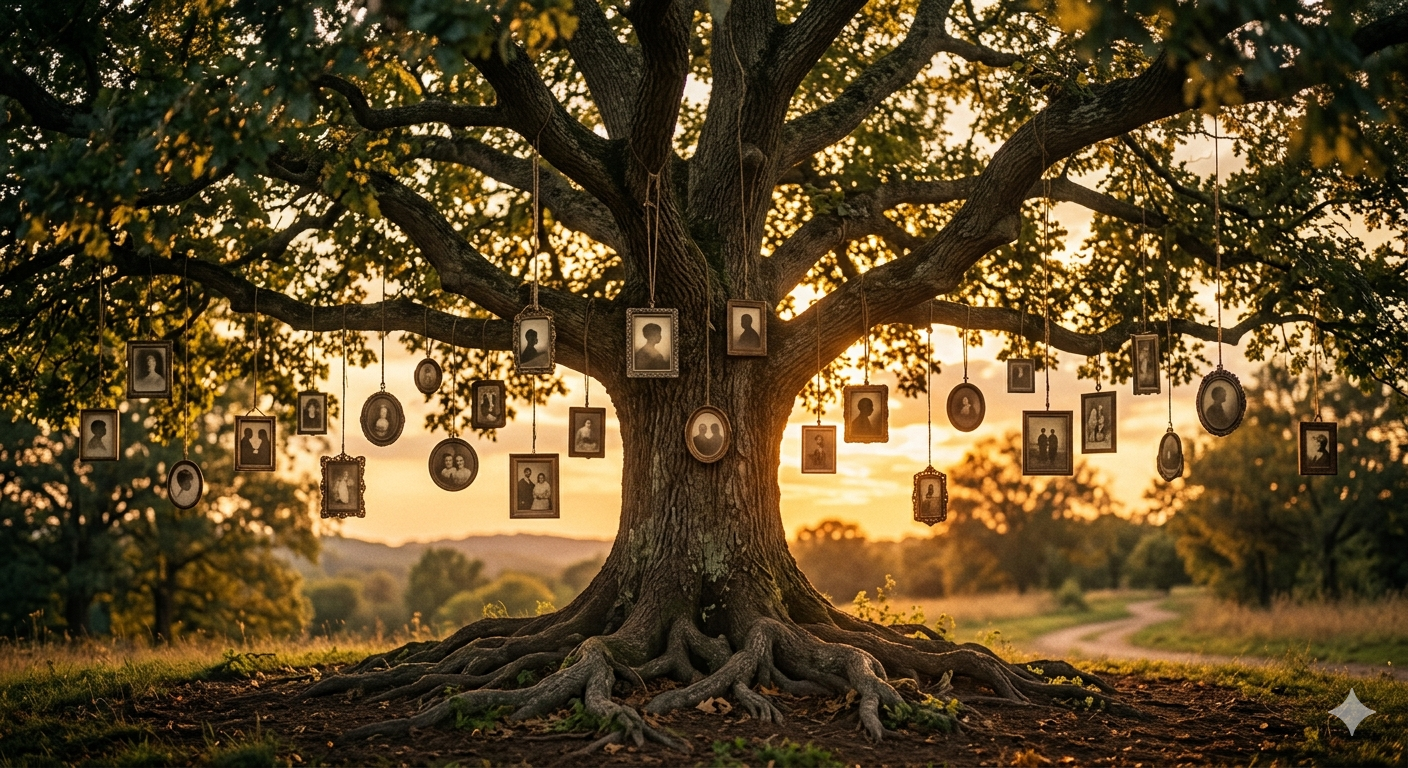
Building a Family Tree After Loss: Preserving Your Legacy for Generations
When someone in the family passes away, especially an elder, something subtle but significant often happens: a piece of the family's collective memory goes with them. Stories about great-grandparents, the origins of a family name, who married whom and when — these details often live only in the minds of the oldest generation. Building a family tree, especially after a loss, is one of the most practical ways to make sure that knowledge isn't lost permanently.
Why losses often prompt this realization
It's common for families to only start asking "wait, what was great-grandfather's full name?" or "where exactly did our family originally come from?" after someone who knew the answers has already passed. Grief has a way of making us suddenly aware of how much we didn't ask, didn't record, didn't preserve in time.
What a digital family tree actually preserves
A family tree isn't just names and dates connected by lines. Done well, it can hold:
- Photos of each family member, not just text
- Short biographies — who they were, what they did, what they were known for
- Relationships and connections — siblings, marriages, migrations across cities or countries
- Links to individual digital memorials — so each name on the tree connects to a fuller story, not just a label
Why this matters more for Indian families specifically
Many Indian families carry rich oral histories — stories of migration during Partition, of ancestral villages, of family businesses started generations ago. These stories are rarely written down in one place, and they tend to fade or fragment as they're passed down informally through different relatives' versions. A digital family tree, built collaboratively, lets multiple family members contribute what they know, cross-check details, and create one accurate, shared record.
Starting the process
You don't need every detail to begin. Start with what you know — immediate family, grandparents, perhaps a few stories you remember clearly — and treat it as an ongoing project. Invite other relatives to add what they know. Over time, even small contributions from different family members build into a complete, lasting record.
A gift to the generations that follow
A family tree built today, after a loss, becomes something your children and grandchildren will be grateful for decades from now — not because they'll need it immediately, but because the alternative is losing that history altogether.
Start building your family's tree on Heavenly Tribute and connect generations.